Software Developer - Interoperability for Single-Cell and Spatial Omics Methods
Reference number: 2025-0331
- Heidelberg
- Full-time
- Computational Genomics and Systems Genetics
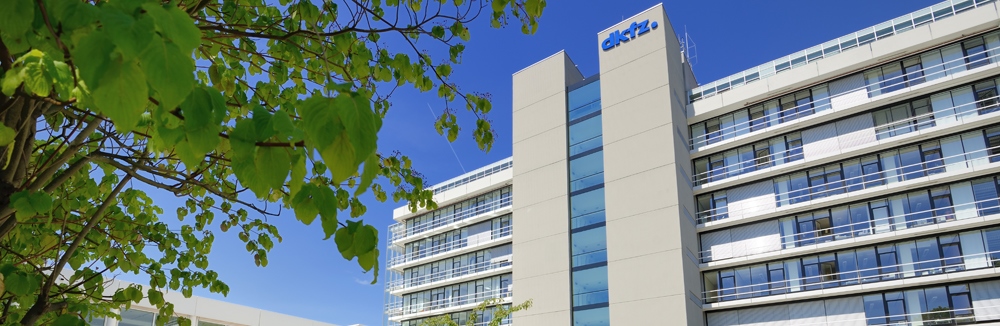
The German Cancer Research Center (DKFZ) is one of Europe’s largest cancer research centers. “Research for a life without cancer" is the mission of our world-class scientists and all our team members.
We investigate how cancer develops, identify cancer risk factors and search for new cancer prevention strategies. We develop new methods with which tumors can be diagnosed more precisely and cancer patients can be treated more successfully. Every contribution counts – whether in research, administration or infrastructure. This is what makes our daily work so meaningful and exciting.
The Division of Computational Genomics and Systems Genetics develops and applies computational approaches to study molecular variations and their phenotypic consequences.
To strengthen our team, we are seeking for the next possible date a
The research group of Prof. Dr. Oliver Stegle is seeking a software developer to advance interoperability for single-cell and spatial omics across the scverse (Python) and Bioconductor (R) ecosystems. The project focuses on enhancing the FAIR capabilities of SpatialData, a modern Python framework for spatial omics, across platforms, and on strengthening its language-agnostic file format based on the OME-NGFF open standard. You will help ensure seamless cross-language usage, robust data exchange, and clear specifications that serve both communities.
You will be part of a vibrant open-source environment at the interface of software development and biomedical research - specifically within the global scverse community. You will have the opportunity to shape widely used, FAIR-by-design tools that accelerate single-cell and spatial omics research across both Python and R ecosystems. We also offer substantial opportunities for professional growth, learning, and leadership, including mentorship, structured code reviews, participation in conferences and hackathons, and visibility through community calls and cross-consortium initiatives. Recent community events include the Scverse Hackathon in Paris (2025) and the NGFF Hackathon in Zurich (2025); previous hackathons have taken place in Boston, Cambridge, Heidelberg, Innsbruck, and Munich.
The Stegle group is jointly based at DKFZ and EMBL and embedded in Heidelberg’s vibrant ecosystem for data science, machine learning, and computational biology. We collaborate closely with research groups across Germany and worldwide, and we actively engage with open-source communities through coordinated development, cross-consortium events, and hackathons.
Your tasks:
- Expand the bridge between the scverse and R/Bioconductor ecosystems through interoperable software development focused on the OME-Zarr file format and the SpatialData framework
- Build and automate an infrastructure to ensure continued interoperability of SpatialData across R/Python, including robust converters, I/O layers, and validation tests
- Improve the documentation of the SpatialData format with clear tutorials, examples, and contributor guides that lower the barrier to entry
- Contribute to the NGFF specification and help support the incoming versions, in particular NGFF 0.6/RFC-5 and RFC-8, via updates to the SpatialData codebase, but also by contributing to the NGFF codebase
- Engage with the open-source scverse and NGFF communities: triage issues; review PRs; collaborate in public forums and with the possibility to participate in cross-consortium events, sprints, and hackathons
Your profile:
Required Qualifications:
- An M.Sc. or equivalent in computer science, statistics, mathematics, physics, engineering, or a biological science with demonstrated experience in statistics and software development
- Software development skills in Python and familiarity with the data science and geospatial Python stack (e.g., xarray, dask; GeoPandas/Shapely a plus)
- Open-source development practices: Git/GitHub, code review, testing (e.g., pytest), packaging, CI/CD (e.g., GitHub Actions), and documentation (e.g., Sphinx)
- Excellent collaboration and communication skills; motivation to contribute to a scientific, community-driven project as a supportive, creative, and responsible team member
Preffered Qualifications:
- Experience with R/Bioconductor, AnnData/SummarizedExperiment, Zarr/NGFF, or designing cross-language APIs and data schemas
- Research experience implementing statistical learning or machine learning (e.g., Bayesian inference, deep learning), ideally connected to spatial omics, and experience with frameworks like PyTorch, Keras, Pyro, or TensorFlow
Application process:
- Interested candidates should submit a cover letter, a CV, and the contact details of 2 referees via our online application tool. Please elaborate in your cover letter on your (open-source) software development experience, or willingness to contribute. Ideally, please provide links to Git repositories where you made significant contributions.
- We will conduct two rounds of interviews. In the first round, taking place online, you will be asked to bring and comment on a code sample/project of your choice that you previously wrote, for approximately 15-30 minutes. You can also choose to bring a newly written short code sample (100-500 lines of code). The rest of the interview will follow with general and technical questions related to the job description.
- In the second round, we will ask you to perform a spoken code review on a short sample code that we will prepare, and you will also meet the team (either online or in person).
- You are encouraged to ask questions, whether technical or related to team culture, at any stage of the interview process.
- Applications will be reviewed on a rolling basis, so you are encouraged to apply before the deadline.
If you’re excited about building interoperable, well-documented, and community-aligned software that advances spatial omics, we’d love to hear from you.
Recent relevant publications:
Marconato, L., Palla, G., Yamauchi, K.A. et al. SpatialData: an open and universal data framework for spatial omics. Nat Methods 22, 58–62 (2025). https://doi.org/10.1038/s41592-024-02212-x
Crowell, H. L., Dong Y., Billato I. et al. Orchestrating Spatial Transcriptomics Analysis with Bioconductor. bioRxiv 2025.11.20.688607; doi: https://doi.org/10.1101/2025.11.20.688607
Moore, J., Basurto-Lozada, D., Besson, S. et al. OME-Zarr: a cloud-optimized bioimaging file format with international community support. Histochem Cell Biol 160, 223–251 (2023). https://doi.org/10.1007/s00418-023-02209-1
Virshup, I., Bredikhin, D., Heumos, L. et al. The scverse project provides a computational ecosystem for single-cell omics data analysis. Nat Biotechnol 41, 604–606 (2023). https://doi.org/10.1038/s41587-023-01733-8
We Offer
Excellent framework conditions: state-of-the-art equipment and opportunities for international networking at the highest level
30 days of vacation per year
Flexible working hours
Remuneration according to TV-L incl. occupational pension plan and capital-forming payments
Possibility of mobile work and part-time work
Family-friendly working environment
Sustainable travel to work: subsidized Germany job ticket
Unleash your full potential: targeted offers for your personal development to further develop your talents
Our Corporate Health Management Program offers a holistic approach to your well-being
Are you interested?
Then become part of the DKFZ and join us in contributing to a life without cancer!
Prof. Dr. Oliver Stegle
Phone: +49 (0)6221/42-3598
We are convinced that an innovative research and working environment thrives on the diversity of its employees. Therefore, we welcome applications from talented people, regardless of gender, cultural background, nationality, ethnicity, sexual identity, physical ability, religion and age. People with severe disabilities are given preference if they have the same aptitude.