Postdoctoral Researcher – Left-Right Asymmetry in Xenopus and Mouse Development
Kennziffer: 2025-0328
- Heidelberg
- Full-time
- Molecular Embryology
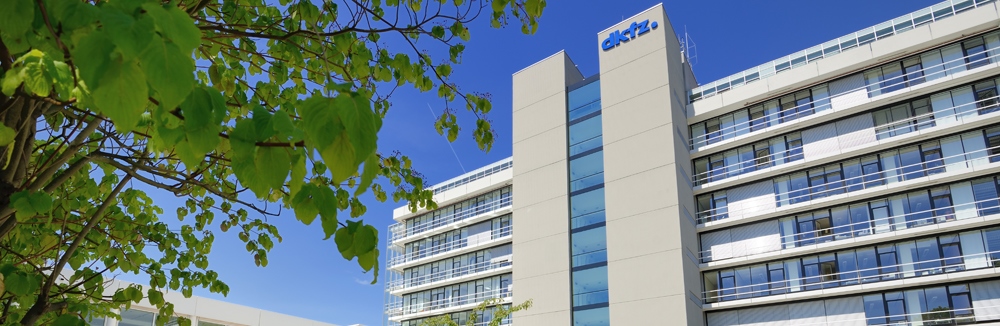
The German Cancer Research Center (DKFZ) is one of Europe’s largest cancer research centers. “Research for a life without cancer" is the mission of our world-class scientists and all our team members.
The DKFZ is a place where the brightest minds pursue bold ideas and seek answers to pioneering scientific questions through collaboration, innovation, and exploration across many disciplines. We provide a dynamic environment which empowers excellence with state-of-the-art technologies, cutting edge infrastructure, and a global scientific network.
Contribute your knowledge, vision, and dedication to create a space where scientific discovery in cancer research is transformed into benefits for human health.
The Division of Molecular Embryology (headed by Prof. Dr. Christof Niehrs) is seeking as of June 2026 a
Research focus of the divison:
Vertebrate organ laterality relies on cilia-driven leftward flow in the left–right organizer (LRO), but the identity and mechanism of the flow-transported symmetry-breaking cue has long remained elusive. Defects in this process are a major cause of laterality disorders and are tightly linked to congenital heart defects, where incorrect left–right patterning can lead to abnormal cardiac looping, malpositioning, and complex structural malformations. Building on our recent work identifying R-Spondin 2 (Rspo2) as a flow-mediated, sinistralizing signal in the Xenopus LRO, we are seeking a highly motivated postdoctoral scientist to extend and mechanistically deepen these discoveries.
Key publications:
Lee H, Camuto CM, Niehrs C. R-Spondin 2 governs Xenopus left-right body axis formation by establishing an FGF signaling gradient. Nat Commun (2024). PMID: 38307837.
Niehrs C, Zapparoli E, Lee H. ‘Three signals – three body axes’ as patterning principle in bilaterians. Cells Dev (2024). PMID: 39121910.
Ihre Aufgaben:
You will investigate how extracellular signals are shaped by cilia-driven flow to break symmetry and how FGF signaling dynamics and receptor trafficking encode the LR vector. Depending on your profile, the project can emphasize Xenopus - or mouse embryology/embryoid research. Besides standard molecular embryology techniques, the project will involve advanced imaging, transcriptomics, and embryoid culture.
Ihr Profil:
Applicants should hold a PhD in developmental biology and have hands-on experience with vertebrate embryology. We are an English-speaking laboratory, so we expect very good English skills.
Interested applicants should submit their documents via our online application tool. The cover letter should state research and career interests, availability date, a list of publications, and details of two references. Incomplete applications will not be considered or acknowledged. Questions may be addressed to office.niehrs@dkfz-heidelberg.de.
Unser Angebot:
- Hervorragende Rahmenbedingungen: modernste state-of-the-art Infrastruktur und Möglichkeit zum internationalen Austausch auf Spitzenniveau
- Vergütung nach TV-L inkl. betrieblicher Altersvorsorge und vermögenswirksamer Leistungen
- 30 Tage Urlaub
- Flexible Arbeitszeiten
- Möglichkeit zur mobilen Arbeit und Teilzeitarbeit
- Familienfreundliches Arbeitsumfeld
- Nachhaltig zur Arbeit: Vergünstigtes Deutschland-Jobticket
- Unser betriebliches Gesundheitsmanagement bietet ein ganzheitliches Angebot für Ihr Wohlbefinden
- Entfalten Sie Ihr volles Potenzial: Zugang zum DKFZ International Postdoc Program und dem DKFZ Career Service mit gezielten Angeboten für Ihre persönliche Entwicklung fördern Ihre Talente
Sie sind interessiert?
Prof. Dr. Christof Niehrs
Telefon: +49 (0)6221-42 4690
Bewerbungen per E-Mail können leider nicht angenommen werden.
Bitte beachten Sie auch, dass wir per Post eingereichte Bewerbungen nicht zurückschicken können.